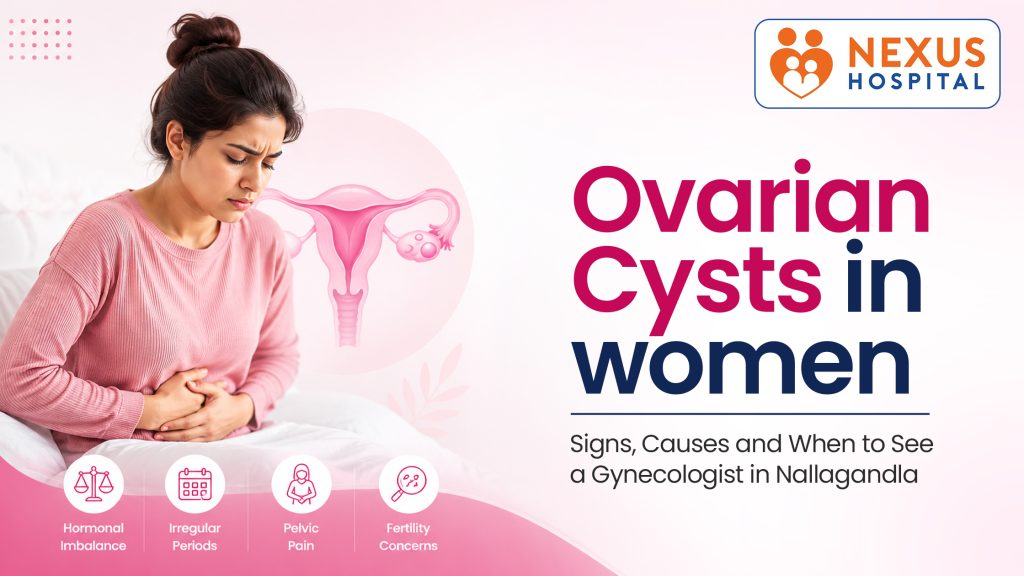
Ovarian cysts are a common gynecological condition that affects women of all ages, especially during their reproductive years. Most ovarian cysts are harmless, painless, and disappear on their own without treatment. However, some cysts can grow larger, cause discomfort, or lead to complications if left untreated.
Because early symptoms are often mild or unnoticed, many women only discover they have an ovarian cyst during a routine pelvic examination or ultrasound. Understanding the signs, causes, and treatment options can help you seek timely medical care and protect your reproductive health.
If you’re experiencing persistent pelvic pain, bloating, or irregular periods, consulting an experienced gynecologist in Nallagandla can help determine the cause and provide appropriate treatment.
What Is an Ovarian Cyst?
An ovarian cyst is a fluid-filled sac that develops on or inside one of the ovaries. The ovaries are part of the female reproductive system and are responsible for producing eggs and hormones such as estrogen and progesterone.
Most ovarian cysts are functional cysts, meaning they form as part of the normal menstrual cycle and usually disappear within a few weeks or months.
Types of Ovarian Cysts
1. Functional Cysts
These are the most common type and include:
- Follicular cysts
- Corpus luteum cysts
They usually resolve naturally without treatment.
2. Dermoid Cysts
These contain tissues such as hair, skin, or fat and may require surgical removal if they grow large.
3. Endometriomas
These cysts develop due to endometriosis and may affect fertility.
4. Cystadenomas
These develop on the surface of the ovary and may contain watery or mucus-like fluid.
5. Polycystic Ovaries
Women with Polycystic Ovary Syndrome (PCOS) may have multiple small cysts along with hormonal imbalance and irregular ovulation.
Common Signs and Symptoms of Ovarian Cysts
Many ovarian cysts cause no symptoms. When symptoms occur, they may include:
- Pelvic pain or lower abdominal pain
- Bloating or abdominal swelling
- Feeling of fullness in the abdomen
- Pain during sexual intercourse
- Pain during bowel movements
- Frequent urination due to pressure on the bladder
- Irregular menstrual periods
- Heavy or painful periods
- Difficulty becoming pregnant in some cases
Symptoms often depend on the size and type of the cyst.
What Causes Ovarian Cysts?
Several factors can contribute to ovarian cyst formation, including:
Normal Ovulation
Functional cysts commonly form during the menstrual cycle.
Hormonal Imbalance
Hormonal changes can increase the likelihood of developing cysts.
Pregnancy
Some cysts support early pregnancy and usually disappear later.
Endometriosis
Endometrial tissue growing outside the uterus can lead to endometriomas.
Pelvic Infections
Severe pelvic infections can spread to the ovaries and cause cysts.
Polycystic Ovary Syndrome (PCOS)
Women with PCOS often develop multiple ovarian cysts due to irregular ovulation.
Warning Signs That Need Immediate Medical Attention
Seek emergency medical care if you experience:
- Sudden, severe pelvic pain
- Fever with pelvic pain
- Vomiting or nausea along with severe pain
- Dizziness or fainting
- Rapid breathing
- Heavy vaginal bleeding
- Severe abdominal swelling
These symptoms may indicate a ruptured ovarian cyst or ovarian torsion (twisting of the ovary), which requires urgent treatment.
How Are Ovarian Cysts Diagnosed?
A gynecologist may recommend:
Pelvic Examination
To detect swelling or tenderness.
Ultrasound Scan
The most common imaging test used to determine the size, type, and location of the cyst.
Pregnancy Test
To rule out pregnancy-related cysts.
Blood Tests
Such as CA-125 in selected cases to help evaluate certain ovarian masses.
MRI or CT Scan
May be recommended if additional evaluation is required.
Treatment Options for Ovarian Cysts
Treatment depends on the size, type, symptoms, and age of the patient.
1. Observation (Watchful Waiting)
Small, simple cysts without symptoms often disappear naturally. Your gynecologist may recommend repeat ultrasounds to monitor them.
2. Medications
Pain relievers may help manage discomfort. Hormonal contraceptives may be prescribed in some women to reduce the risk of developing new functional cysts.
3. Laparoscopic Surgery
Minimally invasive surgery may be recommended if:
- The cyst is large
- It causes persistent symptoms
- It continues to grow
- It appears suspicious
- It has ruptured or twisted
4. Open Surgery
Rarely needed for very large or potentially cancerous cysts.
Can Ovarian Cysts Affect Fertility?
Most functional ovarian cysts do not affect fertility.
However, fertility may be affected if cysts are associated with:
- Endometriosis
- PCOS
- Extensive ovarian surgery
- Large or recurrent cysts
Early diagnosis and appropriate treatment can help preserve reproductive health.
When Should You See a Gynecologist in Nallagandla?
Consult a gynecologist if you experience:
- Persistent pelvic pain
- Frequent bloating
- Irregular or heavy periods
- Pain during intercourse
- Difficulty conceiving
- Recurrent ovarian cysts
- Sudden worsening of abdominal pain
- Any symptoms that interfere with your daily life
Early evaluation helps identify the cause and ensures timely treatment while reducing the risk of complications.
Frequently Asked Questions (FAQs)
1. Are ovarian cysts common?
Yes. Ovarian cysts are very common, especially in women of reproductive age. Most are harmless and disappear without treatment.
2. Can ovarian cysts go away on their own?
Yes. Many functional ovarian cysts resolve naturally within a few menstrual cycles without any treatment.
3. What are the symptoms of an ovarian cyst?
Common symptoms include pelvic pain, bloating, abdominal fullness, irregular periods, pain during intercourse, and frequent urination. Some women may have no symptoms.
4. Can ovarian cysts cause infertility?
Most ovarian cysts do not affect fertility. However, cysts related to conditions like endometriosis or PCOS may impact a woman’s ability to conceive.
5. How are ovarian cysts diagnosed?
They are usually diagnosed through a pelvic examination and an ultrasound scan. Additional blood tests or imaging may be recommended if needed.
Don’t Ignore Persistent Pelvic Pain
While many ovarian cysts are harmless and resolve without treatment, some require medical attention to prevent complications and protect your reproductive health. Ignoring persistent pelvic pain, bloating, or menstrual irregularities can delay diagnosis and treatment.
If you’re experiencing symptoms of an ovarian cyst, consult an experienced gynecologist in Nallagandla for a thorough evaluation and personalized care. Early diagnosis can provide reassurance, relieve symptoms, and support your long-term well-being.