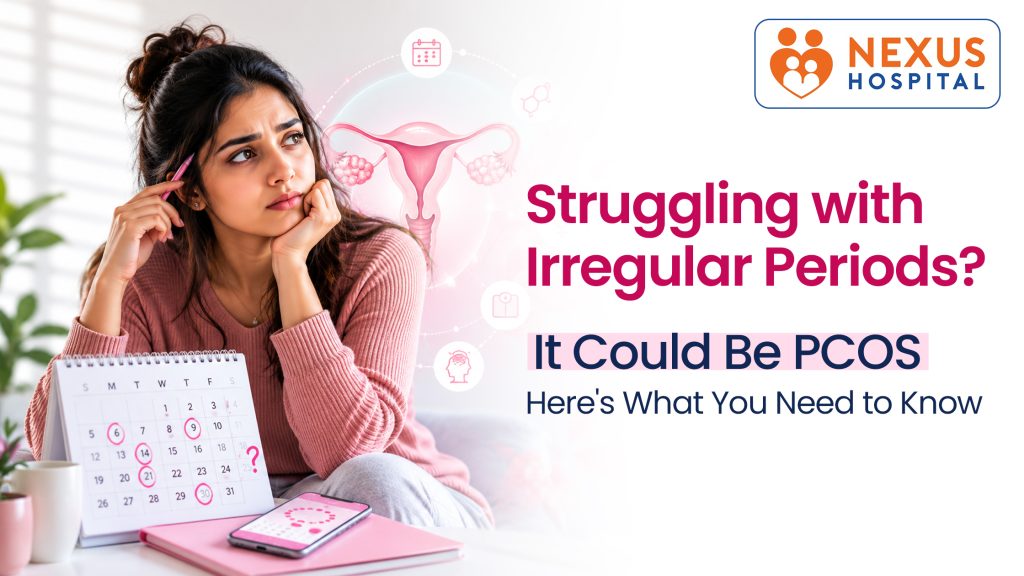
A cycle that shows up whenever it pleases. Months that pass with no period at all, then a sudden heavy one out of nowhere. If that sounds familiar, you are far from alone, and those irregular periods might be pointing to something worth understanding: PCOS, or Polycystic Ovary Syndrome.
It is one of the most common hormonal conditions in women, yet it often goes unspoken and undiagnosed. At Nexus Hospital in Nallagandla, Hyderabad, Dr. Nikhila Muthyala helps women make sense of these signals and take charge of their health.
Here’s the thing: an unpredictable cycle is not just an inconvenience to shrug off. It is often the body’s way of waving a small flag. The sooner that flag is understood, the easier life becomes. Let’s break it down.
What Do Irregular Periods Really Mean?
A typical menstrual cycle runs somewhere around 28 days, give or take. When periods regularly come too early, too late, skip months, or swing wildly in flow, that counts as irregular periods. An occasional off month is usually nothing. A steady pattern of unpredictability, though, is the body asking for a closer look.
A handy first step is simply tracking your cycle for a few months, either in a notebook or a phone app. Patterns that are hard to spot in the moment often jump right off the page, and that record gives your doctor a real head start at the very first visit.
Could It Be Something Else?
Not every irregular cycle traces back to PCOS. Thyroid imbalances, high stress, sudden weight changes, and certain medications can all nudge periods off schedule. That is exactly why a proper evaluation beats guessing. Pinning down the real cause is what makes the right treatment possible, and it spares you months of trial and error.
The PCOS Connection
PCOS happens when the ovaries produce higher than usual levels of certain hormones, which can disrupt regular ovulation. Without steady ovulation, periods become erratic. Think of it like a finely tuned orchestra where a few instruments fall out of rhythm. The whole performance feels off until balance is restored.
It is worth saying plainly: having PCOS does not mean anything is broken. It simply means the body needs a little support to find its rhythm again. Countless women manage it well and go on to live full, healthy lives, including becoming mothers when they choose to.
Spotting the Signs of PCOS
PCOS shows up differently in different women, which is partly why it is missed so often. Common signs include:
- Irregular or missed periods, the most frequent clue
- Unexpected weight gain or difficulty losing weight
- Excess facial or body hair, or thinning hair on the scalp
- Stubborn acne or oily skin
- Difficulty conceiving due to irregular ovulation
It’s More Than Just Periods
Many women are surprised to learn that PCOS reaches beyond the menstrual cycle. It can affect mood, energy, skin, and confidence too. Recognising the bigger picture is the first real step toward feeling like yourself again.
For plenty of women, the hardest part is feeling dismissed or quietly told it is all in their head. It is not. PCOS is real, common, and very treatable, and being taken seriously is often the turning point that changes everything.
Why PCOS Deserves Your Attention Now?
Left unmanaged over the years, PCOS can raise the risk of type 2 diabetes, high blood pressure, and fertility challenges. You might be wondering whether it is worth acting on a few skipped periods. The honest answer is yes. Early, simple steps today can prevent far bigger headaches later, and most women feel noticeably better once treatment begins.
There is also the day-to-day side of things. Unpredictable periods make life hard to plan, and symptoms like acne or weight changes can quietly chip away at confidence. Addressing PCOS is not only about protecting future health. It is about feeling good in your own skin right now.
How PCOS Is Diagnosed and Treated at Nexus Hospital?
Diagnosis is usually straightforward, combining a conversation about symptoms, a clinical check, blood tests, and an ultrasound. The encouraging truth is that PCOS is very manageable. Treatment is personalised, never one size fits all, and often blends a few gentle approaches:
| Approach | What It Involves | How It Helps |
| Lifestyle | Balanced meals, regular movement, better sleep | Restores hormonal balance and eases symptoms |
| Medication | Targeted treatment to regulate the cycle | Brings back more regular periods |
| Fertility support | Ovulation tracking and induction when needed | Helps women trying to conceive |
| Ongoing care | Regular checks of sugar and hormones | Prevents long-term complications |
Take Sneha, who spent two years blaming stress for her unpredictable cycle and stubborn weight gain. A simple evaluation revealed PCOS, and within months of a tailored plan her periods steadied and her energy returned. Her words afterwards said it all: she only wished she had asked sooner. Explore the dedicated PCOS treatment and menstrual disorders care at Nexus to see how support is structured.
The goal is never to chase quick fixes. Instead, the plan is shaped around what matters most to you, whether that is steadier periods, clearer skin, or preparing your body for pregnancy. Progress is reviewed regularly and adjusted as your body responds, so the care grows with you.
Small Changes That Make a Real Difference
Treatment is not only about prescriptions. A few steady habits often move the needle more than anything else:
- Balanced meals built around whole foods, with less refined sugar
- Regular movement, even a brisk daily walk genuinely counts
- Better sleep and simple, realistic stress management
- Consistent follow-up so the plan keeps pace with your body
Frequently Asked Questions (FAQs) About Irregular Periods Treatment
1. Can irregular periods always mean PCOS?
Not always. Irregular periods can stem from stress, thyroid issues, or other causes, but they are a common sign of PCOS. A simple evaluation at Nexus Hospital can pinpoint the real reason.
2.How is PCOS diagnosed in Nallagandla?
PCOS is usually diagnosed through a symptom review, blood tests, and an ultrasound. Dr. Nikhila Muthyala offers complete PCOS and PCOD management tailored to each woman.
3. Can I still get pregnant if I have PCOS?
Yes. Many women with PCOS conceive successfully with the right support. Options such as ovulation induction and fertility evaluation can help when conceiving feels difficult.
4. Does losing weight help with PCOS and irregular periods?
For many women, balanced nutrition and regular activity improve hormonal balance and help regulate periods. Your doctor will design a realistic plan that fits your body and lifestyle.
5. How do I book a PCOS consultation at Nexus Hospital?
Booking is simple. Call Nexus Hospital in Nallagandla or use the form on the contact page to schedule a consultation with Dr. Nikhila Muthyala.
Take Back Control of Your Cycle
Irregular periods are not something to simply endure or explain away year after year. With the right guidance, PCOS becomes a condition you manage rather than one that manages you.
At Nexus Hospital in Nallagandla, Dr. Nikhila Muthyala offers patient, evidence-based care that treats the whole person, not just a single symptom. Every plan starts with listening, because no two women experience PCOS in quite the same way.
If your cycle has been keeping you guessing, it is time for real answers instead of anxious internet searches. Book your consultation today and take the first confident step toward balance and better health. Call the hospital or request an appointment here.