Priya was seven months along when she settled into the chair, shoulders up near her ears, phone full of half-read forums and worst-case stories. “Doctor, is a normal delivery even possible for someone like me?” she asked – half hoping, half bracing for bad news. If that question has ever crossed your mind at 2 a.m., you’re in very good company. Almost every expecting mother wonders the same thing.
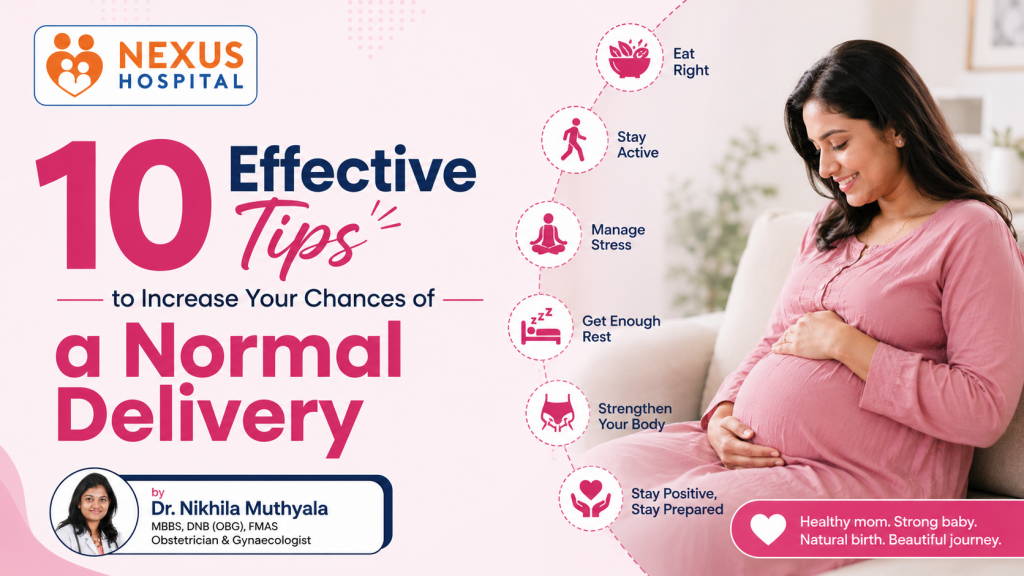
Here’s the comforting part. A normal delivery isn’t pure luck or a coin toss. It’s shaped by the choices you make through pregnancy—how you move, what you eat, how you breathe, and who stands beside you in the labour room. You can’t control everything (nobody can), but you can gently stack the odds in your favour. Below are ten normal delivery tips that work in real life, explained by Dr. Nikhila Muthyala the way a friend who happens to be a doctor would explain them. No jargon. No scare tactics. Just honest, doable steps.
Why a Normal Delivery Is Worth Aiming For?
Let’s be clear about one thing first. A C-section is not a failure—sometimes it’s the safest, most loving choice for mum and baby. But when there’s no medical reason to skip it, a normal delivery (also called a vaginal delivery) usually means a quicker bounce-back and fewer complications. You might be wondering what that actually looks like day to day.
Here’s a simple side-by-side:
| What to expect | Normal Delivery | C-Section |
| Recovery time | Usually a few days | Several weeks |
| Hospital stay | Often 1–2 days | Typically 3–4 days |
| Surgical risks | Lower | Higher (it’s major surgery) |
| Early bonding & feeding | Often easier, sooner | May take a little longer |
So the goal isn’t to “win” a normal delivery at any cost. It’s to give your body the best possible shot at one, safely. Now, the tips.
10 Effective Tips to Increase Your Chances of a Normal Delivery
1. Start Prenatal Care Early and Don’t Skip a Single Visit
Think of prenatal care as a series of tiny course-corrections. Catching things early—blood pressure, sugar levels, the baby’s position—means small fixes instead of big emergencies later.
Mothers who book in early and keep their appointments tend to walk into labour calmer and better prepared. The World Health Organization puts regular antenatal visits at the heart of a healthy pregnancy, and honestly, it’s the single easiest win on this list.
2. Keep Moving—Exercise Is Quietly Doing the Heavy Lifting
You don’t need a gym membership or fancy gear. A daily walk, some gentle prenatal yoga, a bit of stretching—these keep your hips open, your stamina up, and your mood steady.
Exercises for normal delivery like squats and pelvic tilts prepare the exact muscles you’ll lean on during labour. The American College of Obstetricians and Gynecologists recommends around 30 minutes of moderate movement on most days for a low-risk pregnancy. Trust me, your future self in the labour room will thank you.
3. Eat Like Your Body’s Building Something—Because It Is
Pregnancy isn’t the season for crash diets or “eating for two” in the dessert sense. It’s about steady fuel:
- Protein — eggs, dal, paneer, chicken, fish for tissue and strength.
- Iron and folate — leafy greens, beans, fortified grains to keep energy and blood healthy.
- Calcium — milk, curd, ragi for baby’s bones and your own.
- Fibre and fluids — fruit, vegetables, whole grains to dodge that classic pregnancy constipation.
Good nutrition keeps your weight in a healthy range, and a healthy weight is one of the strongest friends a natural birth can have.
4. Watch the Weight, Not the Scale Obsessively
Here’s the thing – steady, gradual weight gain is normal and healthy. Too much, too fast can raise the chance of a larger baby or gestational diabetes, both of which can nudge things toward a C-section.
You’re not aiming for thin. You’re aiming for balanced. Your doctor will tell you the right range for your body, so let that number guide you instead of the internet.
5. Learn to Breathe Before the Big Day Arrives
Breath is the most underrated tool in any birth plan. Slow, controlled breathing tells your nervous system, “we’re okay,” which keeps your muscles loose and labour moving.
Antenatal or Lamaze classes teach you exactly how. Practise now—during a contraction is the worst time to learn a new skill.
6. Befriend Your Pelvic Floor
Those quiet Kegel exercises you’ve heard about? They genuinely matter. A strong, supple pelvic floor supports the baby’s descent and helps you recover faster afterward.
From the second trimester, many doctors also suggest gentle perineal massage to improve flexibility. Small effort, real payoff.
7. Drink Water Like It’s Your Job
Dehydration is sneaky. It can trigger early, irregular contractions and leave you exhausted before labour properly begins. Keep a bottle within arm’s reach and sip through the day.
Hydration also eases swelling and keeps that constipation at bay. Simple, free, and powerful.
8. Tame the Stress Before It Tames You
Fear and tension don’t just feel bad—they tighten the very muscles you need to relax. A worried mind can actually slow labour down. So protect your peace.
Try meditation, soft music, journaling, a daily walk, or honest conversations with someone who calms you. A relaxed mum often has a smoother path to a normal delivery.
9. Move and Change Positions During Labour
Picture this: gravity is on your side, but only if you let it work. Walking, rocking on a birthing ball, swaying, or simply standing can help your baby settle into the right position and speed things along.
Lying flat the whole time isn’t always your best bet. A supportive birth team will encourage you to keep moving as long as it’s safe.
10. Surround Yourself With the Right Birth Team
This one’s big. The doctor and hospital you choose shape your entire experience. A team that believes in normal delivery, explains your options without rushing, and stays patient through every stage can be the difference between panic and confidence.
You deserve people who treat birth as something your body was built to do—not a problem to be managed.
Your quick-glance cheat sheet:
| # | The Tip | Why It Helps |
| 1 | Early prenatal care | Catches issues while they’re still small |
| 2 | Regular gentle exercise | Builds stamina and opens the hips |
| 3 | Balanced nutrition | Healthy weight and a healthy baby |
| 4 | Steady weight gain | Lowers the risk of complications |
| 5 | Breathing practice | Keeps you calm and labour flowing |
| 6 | Pelvic floor & perineal care | Eases the baby’s descent |
| 7 | Plenty of water | Steadier contractions, more energy |
| 8 | Stress management | Relaxed muscles, smoother labour |
| 9 | Active labour positions | Lets gravity do its job |
| 10 | The right birth team | Confidence and patient, expert support |
When a Normal Delivery Isn’t the Safest Choice
Let’s talk straight, friend to friend. You can do everything “right” and still need a C-section—and that’s perfectly okay. Conditions like a breech baby, placenta previa, certain high-risk pregnancies, or sudden distress during labour can mean surgery is the safer route.
Following these normal delivery tips improves your chances; it doesn’t hand out guarantees. The real goal—always—is a healthy mum and a healthy baby, however they arrive. A good doctor will guide you honestly, not push you toward a number on a chart.
Frequently Asked Questions (FAQS) About Normal Delivery
1. Can I increase my chances of a normal delivery if my first baby was a C-section?
Often, yes. Many women have a successful vaginal birth after a C-section (VBAC), depending on the reason for the first surgery and how your pregnancy is going. It’s a conversation to have early with your doctor, who can weigh your specific history and guide you safely.
2. Which exercises for normal delivery are actually safe during pregnancy?
Walking, prenatal yoga, swimming, pelvic tilts, and squats are generally gentle and effective. The NHS offers a helpful starting point, but always run your routine past your own doctor first—every pregnancy is different.
3. Does staying active really improve my odds of a natural birth?
It genuinely helps. Regular movement builds the stamina labour demands, keeps your weight in a healthy range, and strengthens the muscles you’ll rely on. Active mums often report shorter, more manageable labours—one of the simplest normal delivery tips out there.
4. How early should I start prenatal care for the best normal delivery outcome?
As soon as you know you’re pregnant, ideally in the first trimester. Early prenatal care lets your doctor track your health from day one and catch anything small before it grows—which directly supports your chances of a smooth, normal delivery.
5. What raises the risk of needing a C-section instead of a vaginal delivery?
A breech baby, placenta complications, very high blood pressure, gestational diabetes, or distress during labour can all tilt things toward surgery. Healthy habits and steady weight gain lower these risks, but the final call always rests on what’s safest for you and your baby.
A normal delivery is less about a single magic moment and more about a hundred small, caring choices made over nine months. Start early, move often, eat well, breathe deep—and choose a doctor who believes in you. Your body is far stronger than your 2 a.m. worries let you believe.
Why Mums-to-Be in Hyderabad Trust Dr. Nikhila Muthyala?
Remember Priya from the start? She went on to have the calm, normal delivery she’d been quietly praying for—not because of luck, but because she had a doctor who walked every step with her. That’s exactly the experience Dr. Nikhila Muthyala is known for. With years of experience in obstetrics and gynaecology, she blends genuine warmth with real clinical skill, the kind of care that makes you feel heard instead of hurried.
For expecting mothers in Hyderabad hoping for a natural birth, her approach is refreshingly human: clear explanations, patient answers to your endless questions, and a team that supports your body’s ability to do what it was made to do. No pressure, no jargon—just steady, expert hands you can trust.
Been putting off that consultation because of fear or confusion? It’s time to put your mind at ease. Book your appointment today with Dr. Nikhila Muthyala in Hyderabad, and let an expert who truly listens guide you toward a safe, confident, and joyful delivery.